Meiosis is a fascinating process that plays a crucial role in sexual reproduction. It’s the mechanism by which germ cells are formed, leading to the production of eggs and sperm. Understanding whether meiosis results in haploid or diploid cells is essential for grasping the fundamentals of genetics and cellular biology.
In simple terms, meiosis reduces the chromosome number by half, creating haploid cells from diploid ones. This reduction is vital for maintaining the stability of an organism’s genome across generations. As we explore the intricacies of meiosis, the distinction between haploid and diploid becomes clearer, shedding light on the importance of this process in the cycle of life.
Understanding Meiosis
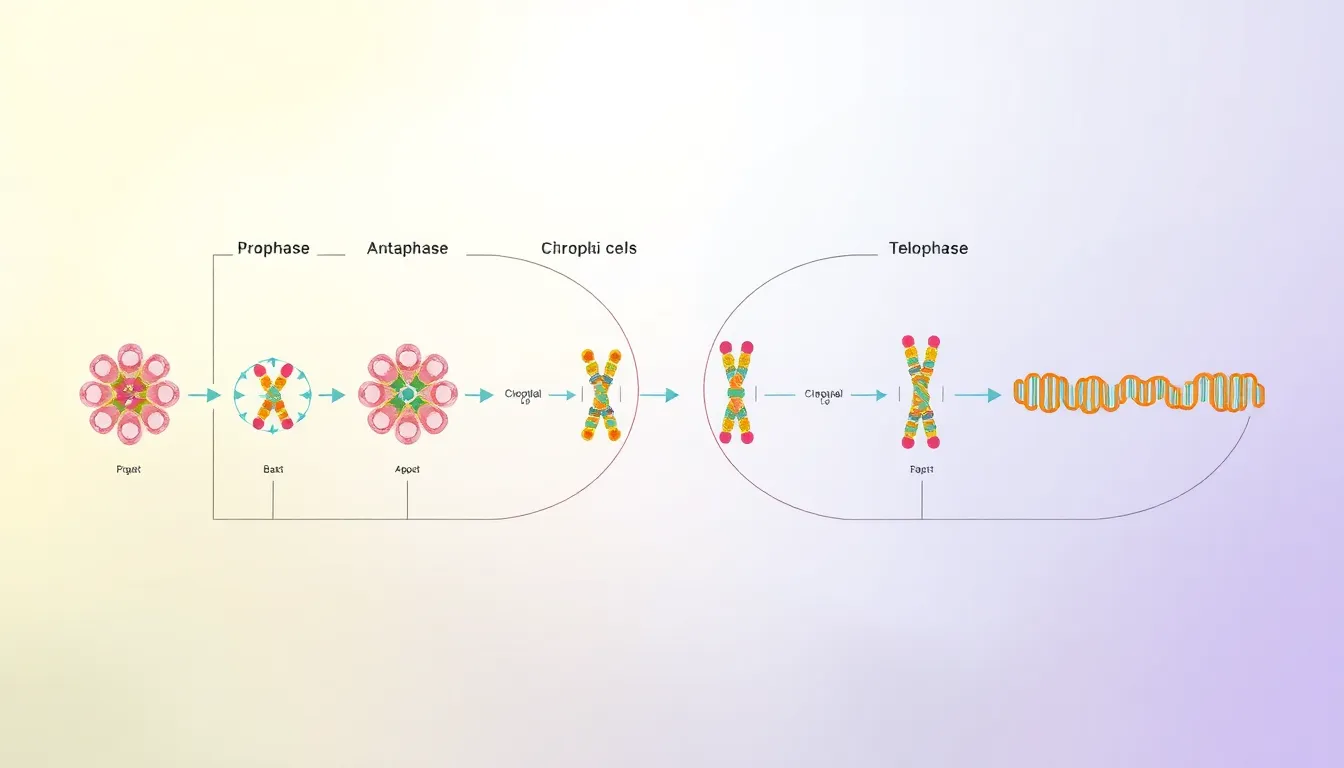
Meiosis consists of two consecutive rounds of cell division, specifically meiosis I and meiosis II, leading to the formation of four haploid cells from a single diploid cell. Each cell contains half the number of chromosomes, crucial for sexual reproduction.
Stages of Meiosis
- Meiosis I:
- Prophase I involves chromosome pairing and crossing over.
- Metaphase I aligns paired chromosomes at the cell’s equatorial plane.
- Anaphase I separates homologous chromosomes, moving them to opposite poles.
- Telophase I results in two daughter cells, each with half the original chromosome number, transitioning to haploid status.
- Meiosis II:
- Prophase II reintroduces spindle fibers in haploid cells.
- Metaphase II aligns chromosomes at the center again.
- Anaphase II separates sister chromatids, distributing them into new cells.
- Telophase II forms four distinct haploid cells, each genetically unique.
Importance of Haploid Cells
Haploid cells are critical for sexual reproduction as they fuse during fertilization, re-establishing the diploid chromosome number in the resulting zygote. Understanding how meiosis creates haploid cells highlights its essential role in generating genetic diversity and maintaining chromosomal stability in offspring.
Meiosis Process Overview
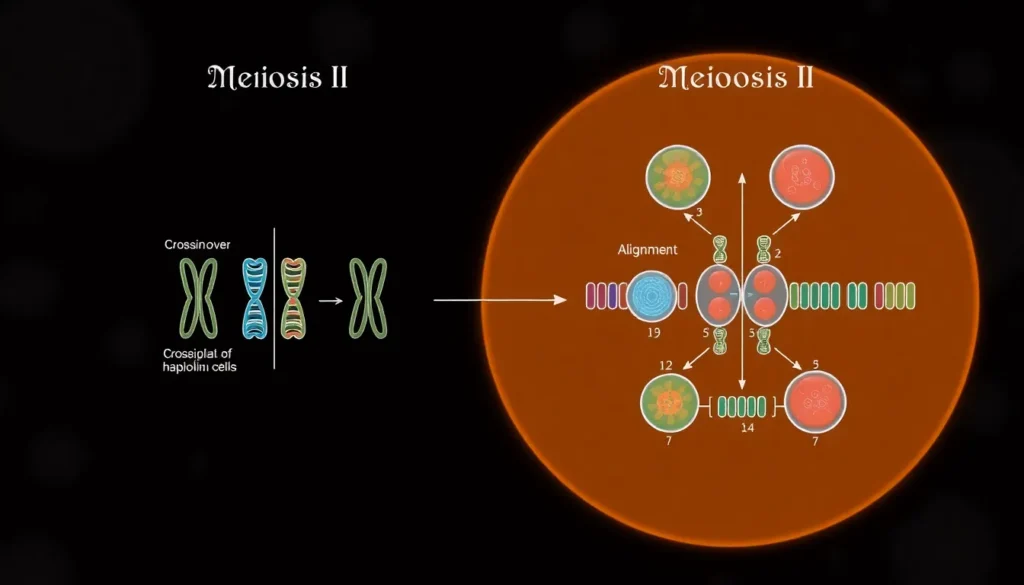
Meiosis consists of two main stages that include multiple phases, resulting in haploid cells from a diploid precursor. This process is fundamental for sexual reproduction and genetic diversity.
Stages of Meiosis
- Meiosis I:
- Prophase I: Chromosomes condense and pair with homologous chromosomes, allowing for genetic recombination or crossing over.
- Metaphase I: Paired chromosomes align at the cell’s equatorial plane. Spindle fibers attach to kinetochores.
- Anaphase I: Homologous chromosomes separate and move to opposite poles of the cell.
- Telophase I: Two new nuclei form around the separated chromosomes, and the cell divides, producing two daughter cells, each with half the original chromosome number.
- Meiosis II:
- Prophase II: Chromosomes condense again in the two daughter cells, and a new spindle apparatus forms.
- Metaphase II: Chromosomes align along the equatorial plane in each daughter cell.
- Anaphase II: Sister chromatids separate and move toward opposite poles.
- Telophase II: Nuclei form around the separated chromatids, leading to the division of the two daughter cells into four haploid cells.
Importance of Meiosis
Meiosis is critical for genetic diversity, as it introduces variations through recombination and independent assortment of chromosomes. By producing haploid gametes, meiosis ensures that offspring inherit a complete set of chromosomes when fertilization occurs. This mechanism maintains chromosomal stability across generations, enabling effective adaptation and evolution in populations. Understanding meiosis’s role emphasizes its significance in biology and reproductive health.
Haploid vs Diploid Explained
Haploid and diploid refer to different chromosome numbers in cells. Understanding their definitions and genetic implications clarifies their roles in meiosis.
Definitions of Haploid and Diploid
- Haploid: A haploid cell contains one set of chromosomes, represented by the symbol n. In humans, haploid cells, such as sperm and egg cells, have 23 chromosomes. These cells result from meiosis, which reduces the chromosome number by half.
- Diploid: A diploid cell contains two sets of chromosomes, denoted by the symbol 2n. In humans, diploid cells, including somatic cells, have 46 chromosomes. These cells undergo mitosis for growth and tissue repair.
Genetic Implications
- Genetic Stability: Haploid cells restore the diploid state during fertilization, maintaining genetic stability across generations. This process prevents chromosomal abnormalities that could arise from having too many or too few chromosomes.
- Genetic Variation: Meiosis introduces genetic variation through processes like crossover and independent assortment. These variations enhance evolutionary adaptability, providing populations with a better chance of survival in changing environments.
- Reproductive Role: Haploid cells are essential for sexual reproduction. They ensure genetic diversity in offspring, resulting from the fusion of two unique haploid cells, which creates genetic combinations that significantly contribute to evolution.
Understanding haploid and diploid cell distinctions, along with their genetic implications, illustrates the fundamental roles these cell types play in biological processes.
Is Meiosis Haploid or Diploid?
Meiosis specifically produces haploid cells from diploid ones, making it essential for sexual reproduction. This process ensures the chromosome number is halved in gametes, which then fuse during fertilization.
Definition of Meiosis
Meiosis encompasses two sequential rounds of cell division, meiosis I and meiosis II. It transforms a diploid cell (2n) into four haploid cells (n). Each haploid cell contains one set of chromosomes, which is vital during gamete formation.
Stages of Meiosis
Meiosis I
- Prophase I: Chromosomes condense, and homologous chromosomes pair up in a process called synapsis, leading to genetic recombination.
- Metaphase I: Homologous pairs align at the cell equator, facilitating independent assortment.
- Anaphase I: Homologous chromosomes segregate to opposite poles, reducing the chromosome number.
- Telophase I: Two daughter cells form, each with half the original chromosome number (haploid).
Meiosis II
- Prophase II: Chromosomes condense again in each haploid cell.
- Metaphase II: Chromosomes align individually at the cell equator.
- Anaphase II: Sister chromatids separate and move toward opposite poles.
- Telophase II: Four genetically unique haploid cells emerge, each equipped for potential fertilization.
Importance of Meiosis
Meiosis generates genetic diversity through recombination and independent assortment, critical for adaptation and evolution. Haploid cells formed during this process play a crucial role in maintaining genetic stability across generations. When haploid gametes unite during fertilization, they restore the diploid chromosome number, providing a balanced genetic framework for the next generation. This mechanism safeguards against chromosomal abnormalities and enhances the overall viability of offspring.
Meiosis is a vital biological process that transforms diploid cells into haploid cells, ensuring genetic diversity and stability in sexual reproduction. This reduction in chromosome number is crucial for the formation of gametes, which play a key role in fertilization and the continuation of genetic material across generations.
By understanding the mechanics of meiosis and the significance of haploid and diploid cells, one can appreciate their impact on evolution and adaptation. The intricate stages of meiosis not only facilitate genetic variation but also uphold the integrity of species by preventing chromosomal abnormalities. This process is fundamental in maintaining the delicate balance of life and evolution.